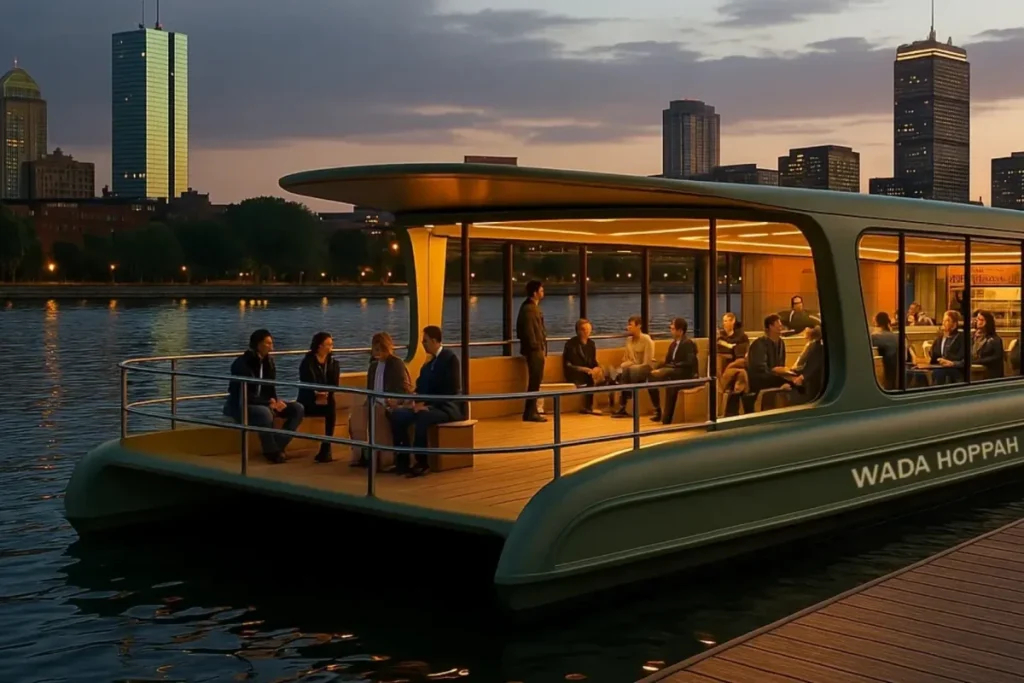

If you’ve ever sat motionless on the Pike or crawled down Storrow Drive at rush hour, you already know: Boston traffic isn’t just bad—it’s brutal. And while the city continues to debate long-term fixes, one local company is pushing a solution that’s been hiding in plain sight: the Charles River.
Boston still ranks among cities with the worst traffic in the country, and the average commuter loses a staggering 134 hours a year behind the wheel. That’s nearly six full days—time you could spend anywhere but gridlock, maybe even maximizing your PTO days.
A new kind of commute on the Charles
Enter Wada Hoppah, a Boston-based startup rethinking how we move through the city. The company is developing what it calls the first all-electric, emissions-free, wakeless water shuttle in the U.S., designed specifically for the Charles River.
This isn’t your typical ferry. To protect rowers, kayakers, and existing river traffic, WadaHoppah engineered a specialized vessel that minimizes wake and environmental impact. The goal: create a smooth, sustainable commute from Watertown Square to Beacon Hill without adding pressure to already congested roads.
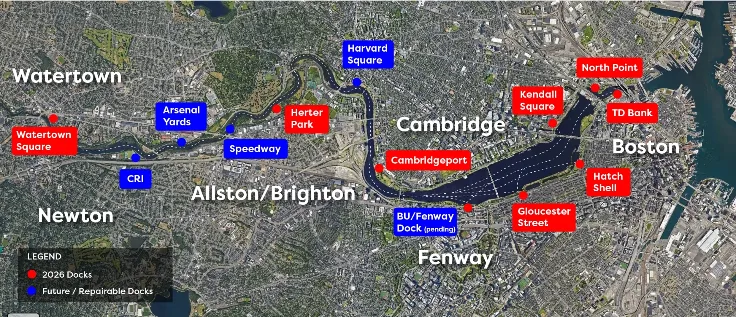
The proposal includes 11 dock stops on both the Boston and Cambridge sides, making it a practical option for daily commuters—not just a scenic ride.
Can it actually cut Boston traffic?
WadaHoppah’s pitch is simple but ambitious. According to founder Drew Rollert, a single shuttle could remove 400–640 cars per day and cut 1.2 tons of CO2 emissions daily. Multiply that across a fleet, and the impact starts to look significant.
Each boat will carry up to 40 passengers and is currently being built in Concord, Massachusetts. Travel times are competitive: a full trip from Watertown to the Hatch Shell is estimated at 67 minutes, while shorter hops—like Kenmore to Back Bay—could take as little as three minutes.
While cities like San Francisco are already testing hybrid and hydrogen-powered ferries, WadaHoppah is still navigating regulatory approvals. The company had initially targeted an earlier launch but continues refining both the vessel and permitting process.
Wada Hoppah expects to launch summer 2026.
For now, Bostonians can track progress—or get ahead of the curve—by signing up to pre-register.