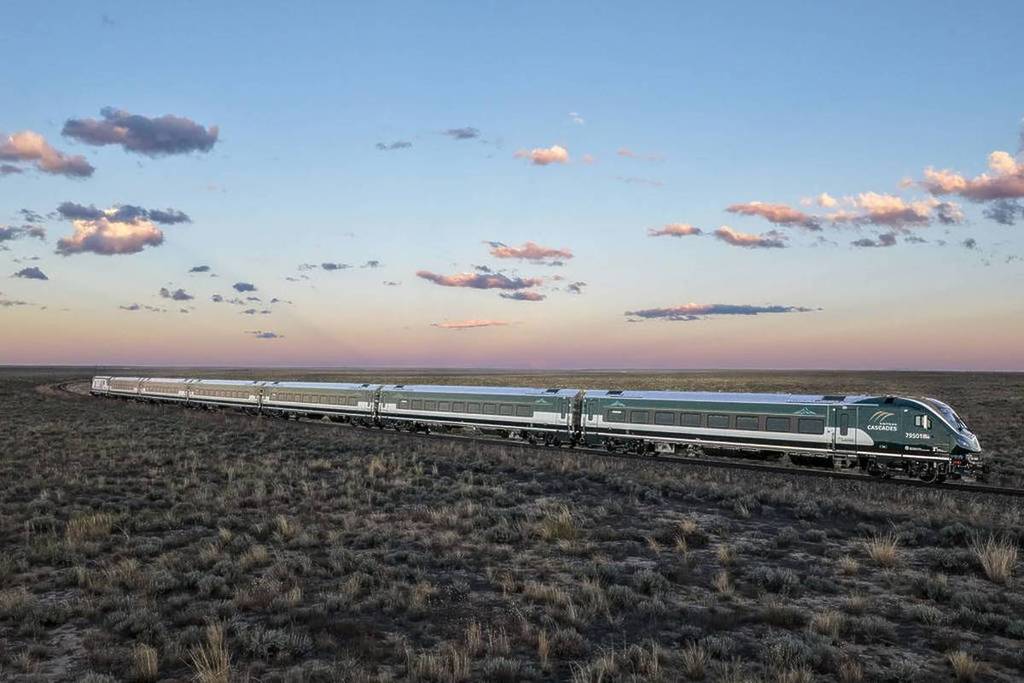
Amtrak’s glossiest, most futuristic train just rolled out in a test run on the Pacific Northwest. Manufactured by Siemens, this new trainset includes 83 “Airo” trains, expected to roll out across the nation, including in Boston.
With its new Airo trainsets, Amtrak aims to enhance the customer experience with modern amenities and improved comfort, reliability, and sustainability with trains that promise to be “more fuel efficient and produce 90% less particulate emissions in diesel operations.”
A new era of train travel
Airo trains travel at speeds up to 125-miles-per-hour; while not a bullet train, Amtrak notes these Airo trains aim to substantially reduce commuter time, and reduce idling time by eliminating engine changes.
Speed is a key asset of the new trainsets in addition to customer comfort. With an emphasis on scenic train trips, the Airo trains feature panoramic glass windows for enhanced views. The trains also feature ergonomic seating with more space, workroom, and improved accessibility and wayfinding throughout the train cars.
Like classic Amtrak trains, the new Airo trains offer coach and business class seating. Amtrak enhanced its Business Class offerings on the Airo trains with options for single or double seats, dedicated outlets and USB ports, touchless restroom controls, and improved lighting.
While a business class seat offers the top tier of the newest train travel, coach amenities also received a facelift on the new trains. The modernized cafe car offers more variety in addition to self-serve dining options.
“Amtrak Airo will transform the travel experience. This is the future of Amtrak,” noted the company in a statement. Amtrak plans for the Airo trains, in addition to the NextGen Acela which launched last year, to become the new standard of American train travel.
Amtrak’s first Airo trainsets will enter service on the Amtrak Cascades, which serves the Pacific Northwest corridor.
Amtrak expects to introduce Airo trains to Boston on its Northeast Corridor route in early 2027 after completing production and testing in 2026.