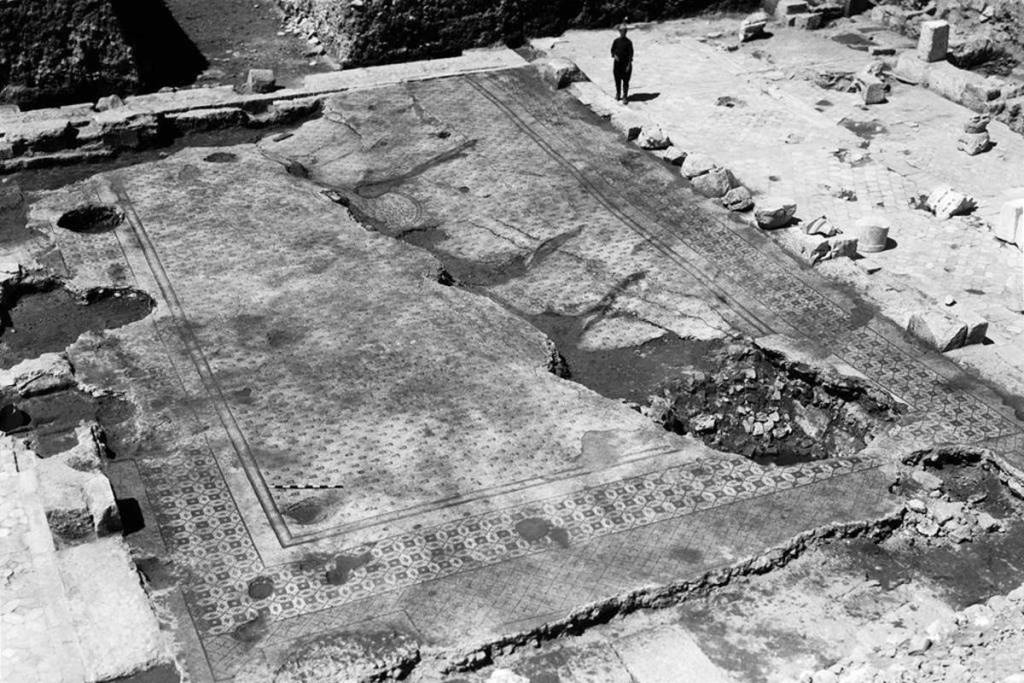

A mosaic floor cut into pieces that ended up in different countries. Drawers of artifacts that sat uncatalogued for decades. At the Davis Museum at Wellesley College, “Excavating Antioch: The Archaeology of an Ancient City” puts many of those pieces side by side again. The exhibition opened September 25, 2026, and it’s free.
The show covers Antioch-on-the-Orontes, today’s Antakya, Türkiye, in two parts: the ancient city, from its founding in 300 B.C.E. through the 12th century, and the 1930s excavation that shaped museum collections in the United States and Europe.
What you’ll see
More than 140 objects are on view, including mosaics, sculpture, architectural fragments, ceramics, lamps and everyday items. They come from the Baltimore Museum of Art, the Davis Museum, Dumbarton Oaks, Harvard Art Museums, Princeton University Art Museum and the Worcester Art Museum. Nearly all have spent years in storage, and many haven’t been catalogued, photographed or displayed in decades.
The exhibition follows the objects through the ancient city’s streets, workshops, residences and baths. Most of the small finds and architectural fragments come from the city’s marble workshop, an elite residence known as the House of Aion, and a public bathing complex called Bath F.
How the objects left Antakya. From 1932 to 1939, Princeton University led excavations in and around Antakya with the Musée du Louvre, the Baltimore Museum of Art and the Worcester Art Museum. Harvard University and Dumbarton Oaks joined in 1937. Wellesley College professor William Campbell served as assistant field director in the first two seasons and later as field director.
The team worked under the French Mandate for Syria and Lebanon and divided its finds through partage, a colonial-era system that split excavated material between authorities in the region and the supporting institutions abroad. About half of the nearly 300 documented mosaics stayed in Antakya. The rest, plus thousands of smaller objects, went to partner museums.
Three years of detective work. Curator Dr. Nicole Berlin found many of these pieces while going through Antioch drawers at the Baltimore Museum of Art. With Contributing Curator Dr. Elizabeth Molacek and Wellesley students, she spent three years matching them to newly digitized excavation records now held at Princeton.
“A large part of this project is reconnecting what partage divided,” Molacek said. Partage sometimes separated objects excavated together, she explained, and in some cases cut a single mosaic floor into pieces that ended up in different countries.
The curators developed the project with Turkish archaeologists Dr. Banu Özdilek of Hatay Mustafa Kemal University and Dr. Onur Tıbıkoğlu of the Issos Epiphaneia Archaeological Research Project, both currently excavating in the Hatay region. Berlin and Molacek plan a second research phase on mosaic, wall painting and architectural stucco fragments held at Princeton.
Visitor information
The exhibition runs at the Davis Museum, Wellesley College, in Wellesley, Massachusetts. The press materials give two end dates, May 20 and May 30, 2027, so check the museum’s visitor information page before you plan a late visit. Admission is free, and the museum is open Tuesday through Sunday, 11 a.m. to 5 p.m.
The Samuel H. Kress Foundation, the Gladys Krieble Delmas Foundation, the Museum Travel Alliance and Dumbarton Oaks funded the exhibition.