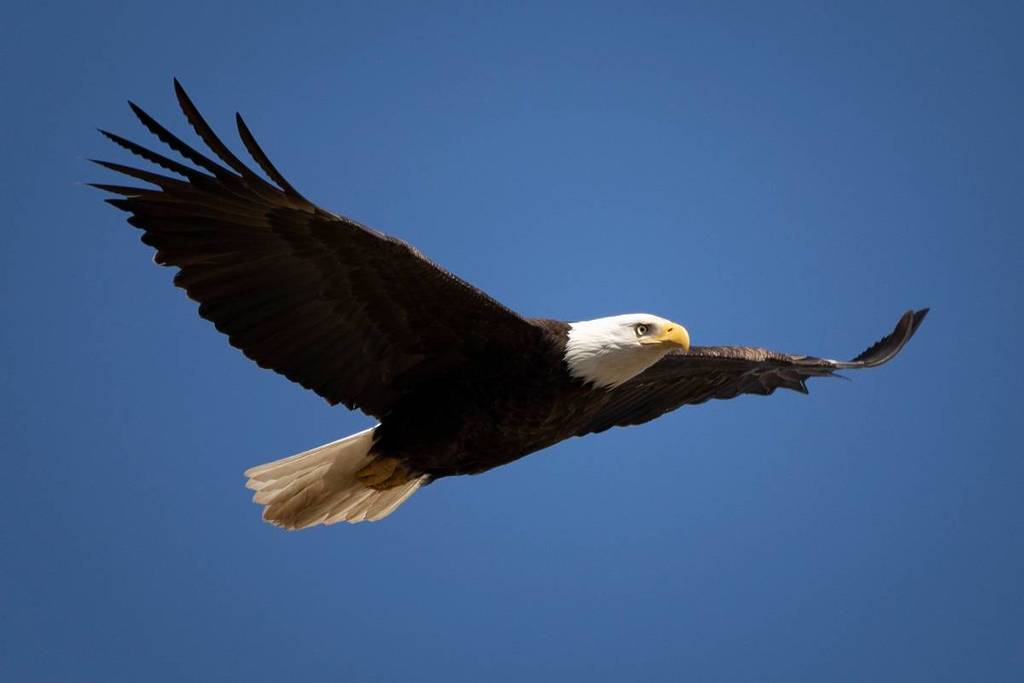
Bald Eagles are on the rise in Massachusetts. While still rare, Bostonians are reporting more bald eagle sightings, both in the city and surrounding suburbs and neighborhoods. Just weeks ago, a bald eagle was spotted tinkering between a half-frozen Charles River while enjoying breakfast. Shortly after, another passerby reported a bald eagle sighting on the Charles River.
Later, a Boston photographer spotted a bald eagle flying into the sunset. It is unclear whether these eagle sightings, reported within days of each other, are the same eagle.
Why are people so enthralled with bald eagles
A national symbol since 1782, the bald eagle is native to North America, but wasn’t officially designated as the national bird until 2024. DDT pesticides nearly wiped out bald eagle populations by causing eggshell thinning. They were reported as endangered from 1967 through 1995.
The sparse number of 450 nesting pairs nationwide skyrocketed to over 10,000 and the bald eagles are respected for their species’ resilience, cementing their status as a national symbol.
Why are they called bald eagles
The word bald comes from the English word “balde.” Balde or balled translated to “white.”
The bird earned the name due to its distinct white head that contrasts with its brown body, rather than the modern use of the word bald which translates to hairless.
How many bald eagles are in Massachusetts
Today the state estimates a total of 100 territorial pairs of bald eagles in Massachusetts, according to the Massachusetts Division of Fisheries and Wildlife. They are the largest predatory bird in the state and wingspans can extend over 7 feet. Populations grew in the last 30 years from near zero to now over 100 pairs. Although rare, Boston sightings of bald eagles are increasing.